The past few years have been dominated by conversations about Generative AI.
Organizations have experimented with chatbots, copilots, content generation, code assistants, and conversational interfaces. While these innovations have created significant value, many enterprises are beginning to realize that Generative AI alone is not enough to solve their most complex engineering challenges.
The next evolution is Agentic AI.
The difference is significant.
Generative AI primarily generates outputs based on prompts.
Agentic AI performs tasks.
An Agentic AI system can analyze a problem, determine the steps required to solve it, execute those steps, evaluate outcomes, and continue working toward an objective with limited human intervention.
For software engineering organizations, this changes everything.
Consider a typical modernization project.
An engineer might need to:
- Analyze application dependencies
- Review source code
- Identify business rules
- Generate documentation
- Create test cases
- Evaluate security risks
- Plan migration strategies
- Validate outcomes
Traditionally, these activities require multiple tools, multiple teams, and significant manual effort.
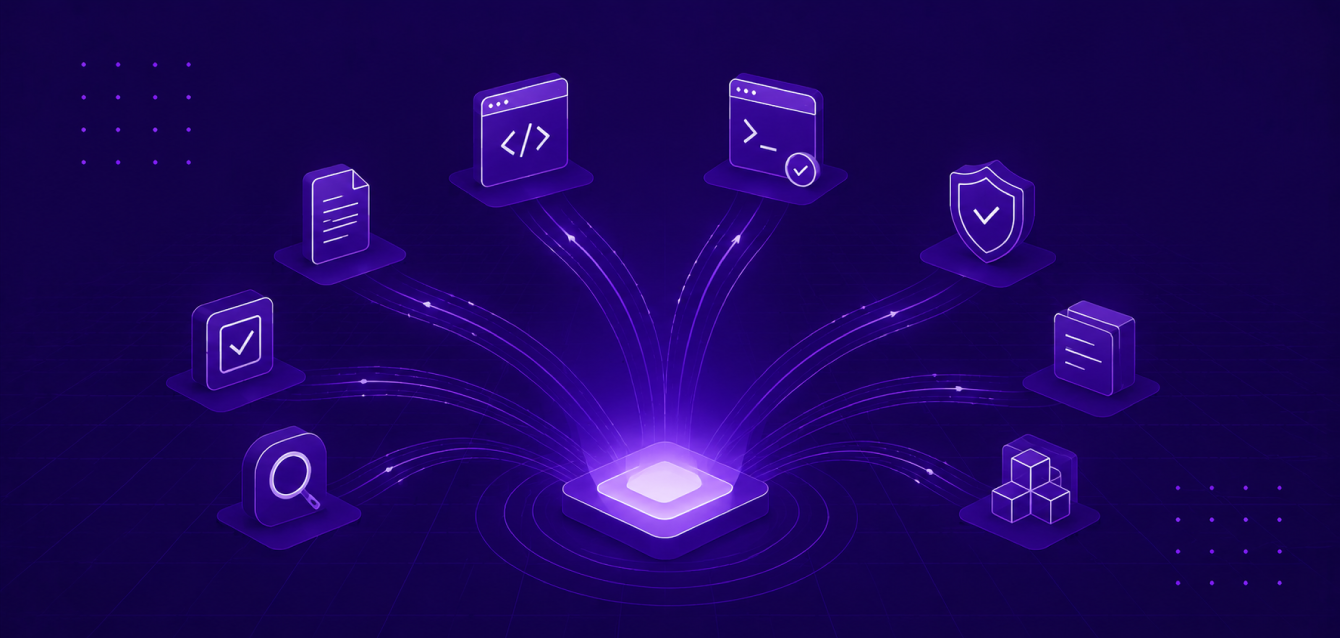
Agentic AI has the potential to orchestrate many of these activities as part of a connected workflow.
The role of the engineer evolves from performing every task manually to supervising, validating, and guiding intelligent systems.
This does not eliminate the need for engineers.
Quite the opposite.
As systems become more sophisticated, human expertise becomes even more important.
Engineers provide context, judgment, governance, creativity, and accountability.
Agentic AI provides scale.
The organizations that gain the greatest advantage will be those that successfully combine both.
At Capten.ai, we view Agentic AI not as a replacement for software engineers, but as a force multiplier.
Our vision is to help engineering teams spend less time on repetitive activities and more time solving strategic business problems.
The future of software engineering will not be defined by who has the largest AI model.
It will be defined by who can most effectively orchestrate intelligent systems to deliver business outcomes.
That future has already begun.